
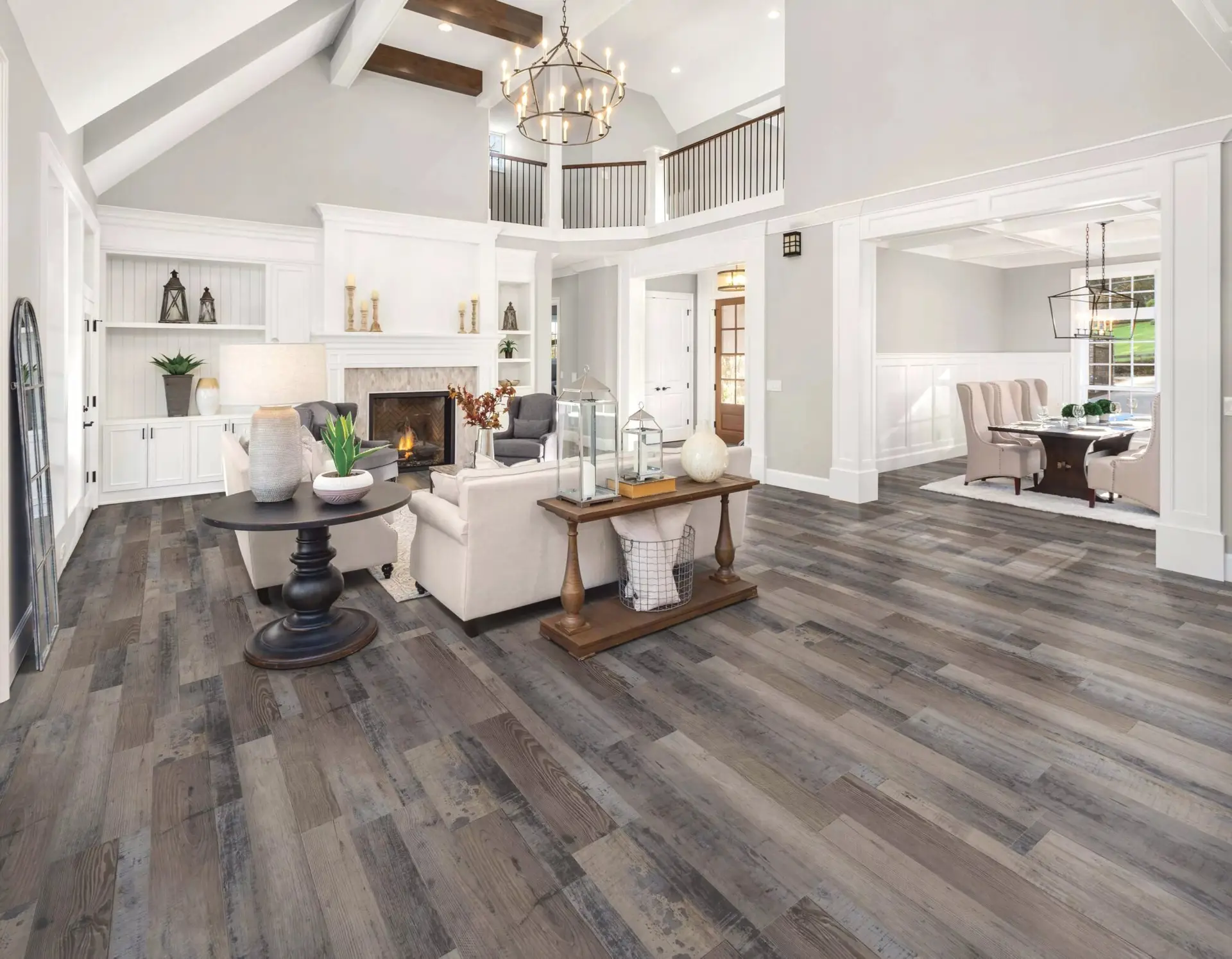
Choosing wood flooring in Minnesota is different than choosing flooring in a mild climate. Our homes deal with dry winters, humid summers, snow, salt, pets, kids, basements, radiant heat, and major seasonal changes. The best flooring option depends on where the floor is going, how the home is built, and how much maintenance or long-term flexibility you want.
At Unique Wood Floors, we help Minnesota homeowners compare flooring options based on appearance, durability, installation method, climate performance, lifestyle, and budget. There is no single “best” floor for every home, but there is usually a best floor for your specific situation.
Here are the most common wood and wood-look flooring options available in Minnesota.
Engineered Hardwood
Engineered hardwood is one of the best all-around options for Minnesota homes. It has a real hardwood surface, but underneath the top layer is a layered core that helps improve stability. That construction makes engineered hardwood less likely to expand and contract as dramatically as solid wood.
This is especially helpful in Minnesota, where indoor humidity can swing from very dry in winter to more humid in summer.
Best for:
- Main levels
- Remodels
- Wide-plank looks
- Homes with seasonal humidity changes
- Homeowners who want real wood with added stability
Pros:
- Real wood appearance
- More dimensionally stable than solid wood
- Available in many widths, colors, textures, and finishes
- Some products can be refinished depending on wear layer thickness
- Often works well over different subfloor types
Things to consider:
- Not all engineered floors are equal
- Wear layer thickness matters
- Some products are better suited for refinishing than others
- Manufacturer humidity requirements still matter
Solid Hardwood
Solid hardwood is the classic real wood flooring option. Each board is made from one solid piece of wood. Solid hardwood has excellent long-term value and can usually be sanded and refinished multiple times over its life.
In Minnesota, solid hardwood can perform very well, especially in above-grade areas, but homeowners should understand that it reacts more directly to changes in humidity. Seasonal gaps in winter are common when indoor air becomes dry.
Best for:
- Above-grade living spaces
- Homeowners who want long-term refinishability
- Traditional hardwood projects
- Custom stain and site-finished applications
Pros:
- Long lifespan
- Can be refinished multiple times
- Timeless appearance
- Strong home value
- Great for custom finishing
Things to consider:
- More sensitive to humidity changes
- Not usually recommended for below-grade basements
- Requires proper acclimation and installation
- Indoor humidity control is important
Site-Finished Hardwood
Site-finished hardwood is installed unfinished, sanded in place, and finished inside the home. This creates a smooth, custom look and allows homeowners to choose stain color, sheen, and finish system.
This option is popular for remodels, additions, repairs, and homeowners who want a more custom result.
Best for:
- Custom stain projects
- Matching existing hardwood
- Homes with multiple rooms and transitions
- Refinishing existing floors
- Homeowners who want a seamless look
Pros:
- Custom color options
- Smooth finished appearance
- Can blend with existing wood floors
- Excellent long-term repairability
- Great for traditional homes and remodels
Things to consider:
- Longer project timeline
- More disruption during sanding and finishing
- Stain, finish type, and wood species affect final appearance
- Requires clear expectations around dust, odor, and cure time
Luxury Vinyl Plank
Luxury vinyl plank, or LVP, is not real wood, but it is a popular wood-look flooring option. It is often chosen for water resistance, durability, and lower maintenance.
For Minnesota homes, LVP can be a practical option in basements, mudrooms, rental properties, and areas where water exposure is a major concern.
Best for:
- Basements
- Mudrooms
- Rentals
- Pet-heavy homes
- Budget-conscious projects
- Areas where water resistance matters most
Pros:
- Water-resistant or waterproof depending on product
- Durable surface
- Lower maintenance
- Often more budget-friendly than hardwood
- Many wood-look designs available
Things to consider:
- Not real wood
- Does not add the same long-term value as hardwood
- Quality varies widely
- Subfloor flatness is still important
Cork Flooring
Cork is a unique natural flooring material that offers warmth, comfort, and sound absorption. It is softer underfoot than hardwood and can be a good fit for bedrooms, offices, and lower-impact spaces.
Best for:
- Bedrooms
- Offices
- Playrooms
- Homeowners wanting comfort and warmth
- Unique design projects
Pros:
- Comfortable underfoot
- Naturally warm feel
- Good sound absorption
- Unique visual character
- Renewable material
Things to consider:
- More niche than hardwood or LVP
- Can dent or scratch depending on use
- Needs proper maintenance
- Product quality and finish matter
Laminate Flooring
Laminate is a wood-look flooring option with a printed visual layer and durable wear layer. It can be a practical choice for budget-conscious projects, though it varies widely in moisture resistance and quality.
Best for:
- Budget projects
- Low to moderate moisture areas
- Homeowners who want a durable surface at a lower price point
Pros:
- Affordable
- Scratch-resistant surface
- Many design options
- Easy to maintain
Things to consider:
- Not real wood
- Cannot be refinished
- Moisture resistance varies by product
- May not have the same feel or value as hardwood
Which Flooring Option Is Best for Minnesota?
For many Minnesota homeowners, engineered hardwood is the best balance of beauty, real wood value, and climate stability. Solid hardwood is still an excellent choice when the home is properly conditioned and the installation setting is right. LVP is a strong choice when water resistance and budget are the top priorities.
The best choice depends on the room, lifestyle, subfloor, budget, and expectations.
Frequently Asked Questions
Q: What is the best real wood flooring for Minnesota?
A: Engineered hardwood is often the best all-around real wood option because it offers the beauty of hardwood with improved dimensional stability.
Q: Is solid hardwood bad for Minnesota homes?
A: No. Solid hardwood can be a great option, especially above grade, but it requires proper installation and humidity control.
Q: Is LVP better than hardwood?
A: LVP is better for water resistance and some budget projects. Hardwood is better for long-term natural beauty, repairability, and home value.